574-318-3326


Commercial Roofing In South Bend, IN: Signs It’s Time To Replace
Date Modified: October 21, 2026
Commercial Roofing In South Bend, IN: Signs It’s Time To Replace
The Warning Signs A Failing Roof Sends Before It Leaks
A commercial roof rarely fails overnight. It sends signals for months before water ever reaches your floor. Most owners miss them because nobody looks up there. At A&M, we handle repairs and full replacements for commercial roofing in South Bend, IN.
By the time a dark stain shows up on an interior ceiling, the membrane above it has usually been leaking for a while. Catching the early signs is what separates a targeted repair from an unplanned replacement.
Commercial roofing refers to the low-slope and flat systems on warehouses, storefronts, industrial buildings, and offices. They age differently than steep-slope shingle roofs. Here are the five signs we check during every maintenance visit: ponding water, blisters, split seams, rising energy bills, and roof age.
Ponding Water & Blisters On Flat Roofing In St. Joseph County, IN
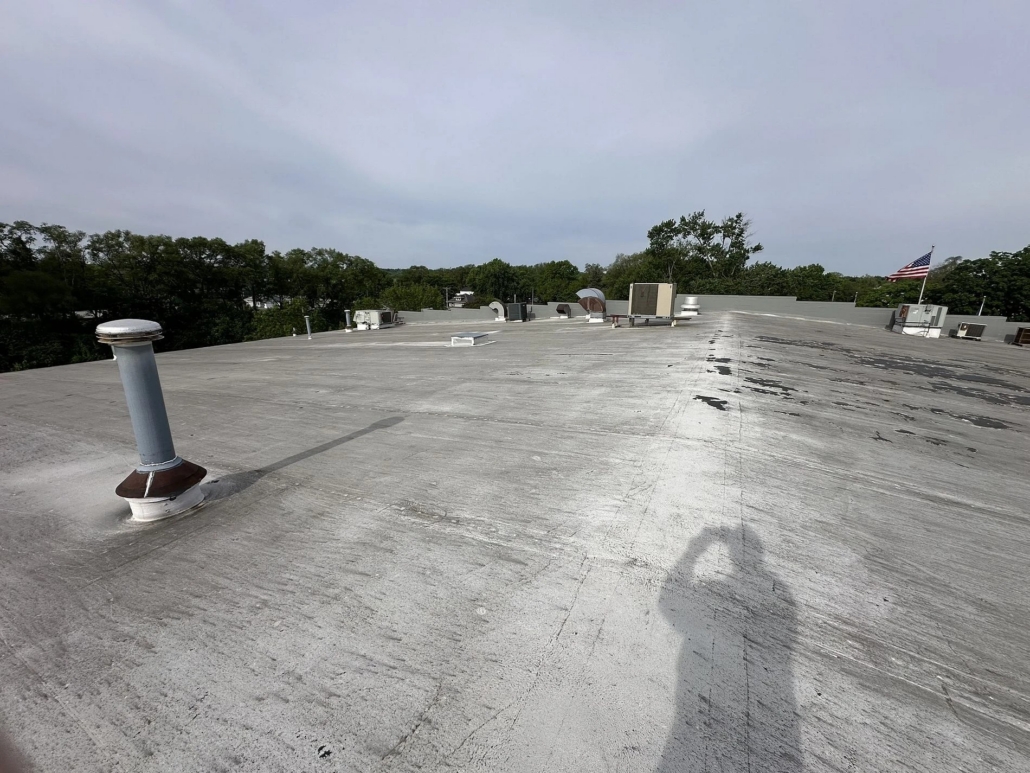
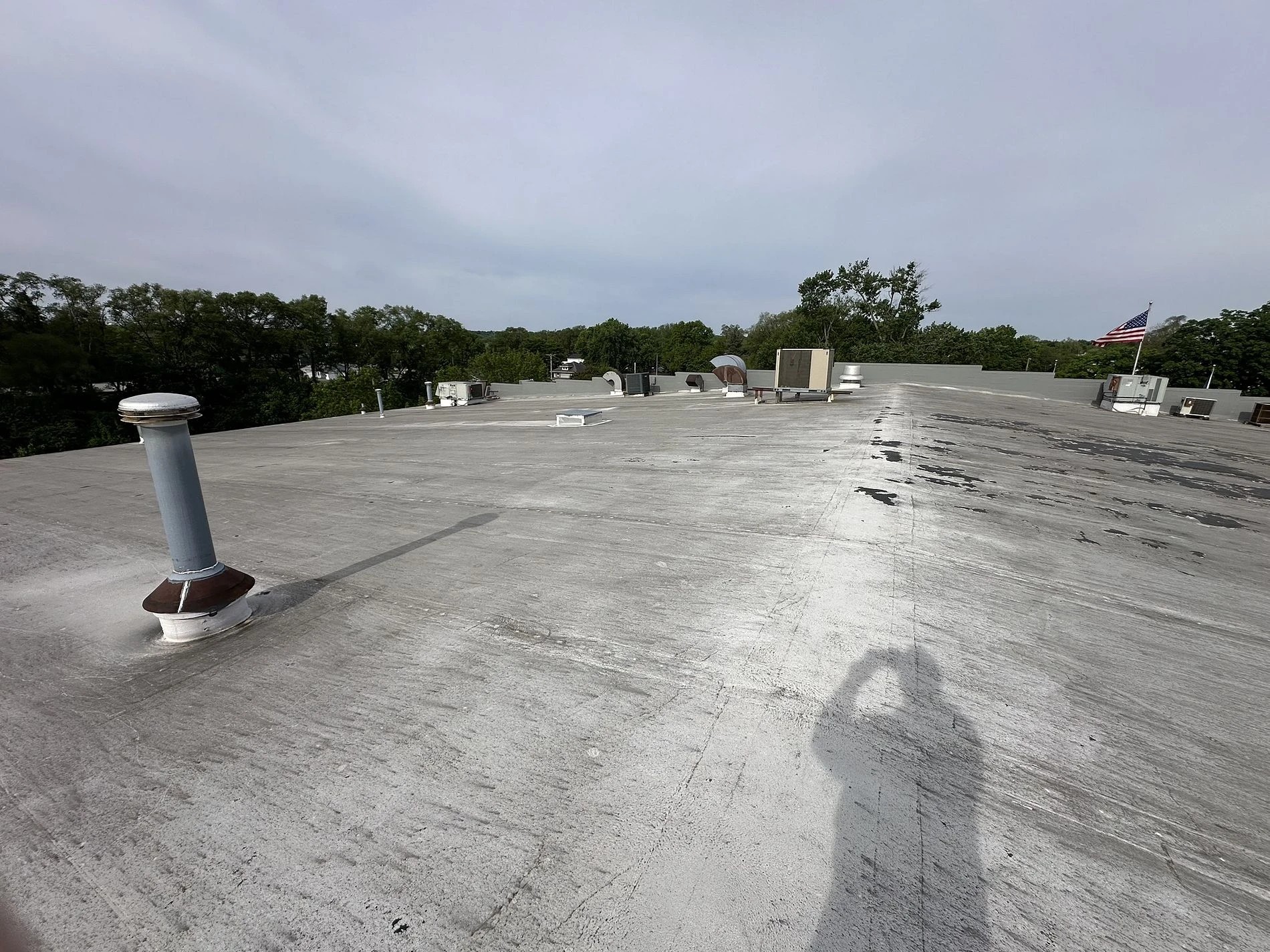
Ponding water is standing water that stays on the roof longer than 48 hours after rain stops. A properly sloped flat roof drains or dries on its own. When water lingers, the deck usually has begun to sag, or the drains are blocked or failing.
Standing water also wears the membrane down from above. Every inch adds about five pounds per square foot of load. Left alone, ponding speeds up every other kind of wear.
Blisters are raised pockets of air or moisture that form beneath the membrane’s top layer. Summer heat expands them, and foot traffic can pop them. Either way, water gets a direct path into the insulation and deck.
We check for both during every flat roof inspection. If ponding covers large sections and blisters are widespread, patches won’t hold for long. That level of wear usually points to a commercial roof replacement.
Split Seams & Membrane Damage On Commercial Roofing In South Bend, IN
Seams are where separate membrane sheets meet and weld together. That makes them the most vulnerable spot on any flat roof. After years of Northern Indiana freeze-thaw cycles, the joints expand, contract, and eventually pull apart.
Once a seam splits, water often travels sideways under the membrane. It can show up inside the building far from where it got in.
TPO is one of the most common single-ply membranes: a heat-welded sheet that reflects sunlight and helps lower cooling costs. As it ages, the top layer can chalk and crack, exposing the reinforcing scrim underneath.
If a large share of the seams are failing, spot repairs turn into an expensive short-term fix. Patch one split seam, and another opens after the next storm. At that point, a new membrane is the more reliable and cost-effective choice.
We document every split seam, worn patch, and flashing gap with photos, so you can see the roof’s condition for yourself. That makes budgeting easier, and the photos can support a property insurance claim if you need one. We walk you through what we’re seeing so the decision stays yours.
Commercial Roofing In South Bend, IN: Rising Energy Bills & Flat Roofing Damage
An aging flat roof can drain your operating budget before a single ceiling tile stains. Once water gets past the membrane, wet insulation loses its R-value. Your HVAC equipment then works harder to hold temperatures steady. Utility bills often climb months before the first active leak.
Inside the building, these signs point to hidden water intrusion:
- Water stains spreading across ceiling tiles or running down interior walls
- Surface rust on exposed metal decking, joists, or fasteners
- Damp, sagging insulation and musty odors in upper-floor spaces
A single damp spot can often be dried and repaired. Staining across several bays is a different story, because it means water has compromised the insulation. Replacing the roof at that stage protects your structural framing and helps bring energy costs back in line.
Northern Indiana winters are especially hard on weakened membranes. Water seeps into small cracks, freezes, and expands, widening the cracks each season. A new membrane stops that cycle before it reaches the insulation and deck.
Age & Repeat Repairs From Your Roofing Contractor In South Bend, IN
Most commercial flat roofing lasts 20 to 25 years, depending on materials, installation, and upkeep. If yours has reached that range and needs constant service calls, the numbers usually favor replacement.
Add up what you’ve spent on repairs over the past three years. Small patches pile up faster than most owners expect. If repairs are approaching a sizable share of what a new roof would cost, you’re paying for a new roof without getting one.
A new single-ply membrane typically carries a manufacturer warranty and can serve for 20 years or more. We’d rather extend a sound roof’s life than sell you a replacement you don’t need. If a targeted repair makes financial sense, we’ll tell you.
Schedule Your Commercial Roofing Inspection
Not sure whether your flat roof needs a patch or a full replacement? The answer usually sits in the seams, the insulation, and your repair history. It’s worth checking all three before winter freeze-thaw sets in.
A&M provides expert commercial roofing inspections across St. Joseph County, IN. We photograph what we find, from compromised seams to blisters and drainage problems, and walk you through it. You’ll get a photo-documented report and a project estimate.
If you need commercial roofing in South Bend, IN, contact A&M today to schedule your free roof inspection.
Common Questions About Commercial Roofing In South Bend, IN
Below are the questions we hear most from commercial property owners weighing repair against replacement.
Q: How long does commercial roofing in South Bend, IN typically last?
A: Most commercial flat roofing systems last 20 to 25 years when they’re installed correctly and maintained. Northern Indiana freeze-thaw cycles and unaddressed ponding water can shorten that.
Q: Is TPO roofing a good fit for a South Bend, IN commercial building?
A: Often, yes. TPO is a single-ply membrane that suits flat and low-slope buildings, and its reflective surface helps lower summer cooling loads. Heat-welded seams resist water well when a qualified crew installs them. The right choice still depends on your building and the roof’s current condition.
Q: When does patching stop being the smart choice?
A: Spot repairs make sense when damage is localized, the insulation is dry, and the roof is well within its 20- to 25-year lifespan.
Once seams pull apart across large sections, or repair bills become a recurring line item, replacing the membrane costs less over time. We’ll look at the roof with you and explain which side of that line yours falls on.